
How to Find Pinterest Keywords for Etsy Products in 2026
To find Pinterest keywords for an Etsy product, begin with the plain product name, study Pinterest search suggestions and results, keep only phrases that match the buyer's real intent, then assign those phrases to the right Pins, boards and destination page. Search suggestions are useful language clues, not proof of sales or a guaranteed traffic forecast.
The practical rule
- Research one Etsy product at a time.
- Prefer buyer phrases over broad words such as “cute” or “ideas.”
- Keep the Pin title, board and destination focused on the same phrase.
- Record what Pinterest shows; do not invent search volume.
- Use impressions and outbound clicks to decide what to improve.
Pinterest currently returns relevant results for the query “Pinterest keywords for Etsy,” including keyword-research guides and Etsy-specific search content. That confirms the problem is recognizable on the platform. It does not tell us how many buyers will click. The workflow below turns that broad problem into a usable research sheet for one product.
Pinterest keyword research for Etsy: the five-step workflow
- Name the product plainly. Use the category a buyer would recognize, such as “macrame wall hanging” or “digital wedding planner.”
- Add one useful modifier. Try the style, recipient, room, format or task when it genuinely changes the search intent.
- Check Pinterest search. Record suggestions and result wording that stay relevant to the product.
- Group phrases by intent. Separate product searches, problem searches, style searches and how-to searches.
- Map the phrase to a page. Decide whether the Pin should open the exact Etsy listing, a shop section or a matching guide.
The output is not a giant keyword bank. It is a short map showing which phrase belongs on which Pin and where the click should land.
Use Pinterest search suggestions to find keyword ideas
- Type the plain product name into Pinterest search.
- Write down suggestions that describe the same item, problem or buyer use.
- Open the result page and inspect whether the visible Pins match the phrase.
- Repeat with one modifier, such as the product format, style or intended room.
- Remove phrases that lead to an unrelated category.
For a hypothetical digital wedding planner, useful candidates might include “digital wedding planner,” “wedding checklist printable” or “wedding budget spreadsheet” only when the product actually includes those outcomes. Do not use a popular-looking phrase for a feature the listing does not provide.
Choose buyer phrases instead of vague keywords
| Weak phrase | Clearer buyer phrase | Why it is clearer |
|---|---|---|
| Pretty decor | Neutral nursery wall decor | Adds a recognizable style and room |
| Planner ideas | Digital wedding planner | Names the product and use |
| Business template | Etsy expense tracker spreadsheet | Names the buyer task and format |
| Gift inspiration | Personalized teacher gift | Names the recipient and product intent |
Specific does not mean awkwardly long. Keep the phrase natural enough to read in a Pin title. If the wording sounds like a list of disconnected tags, split it into separate Pins instead.
Build a keyword list for one Etsy product
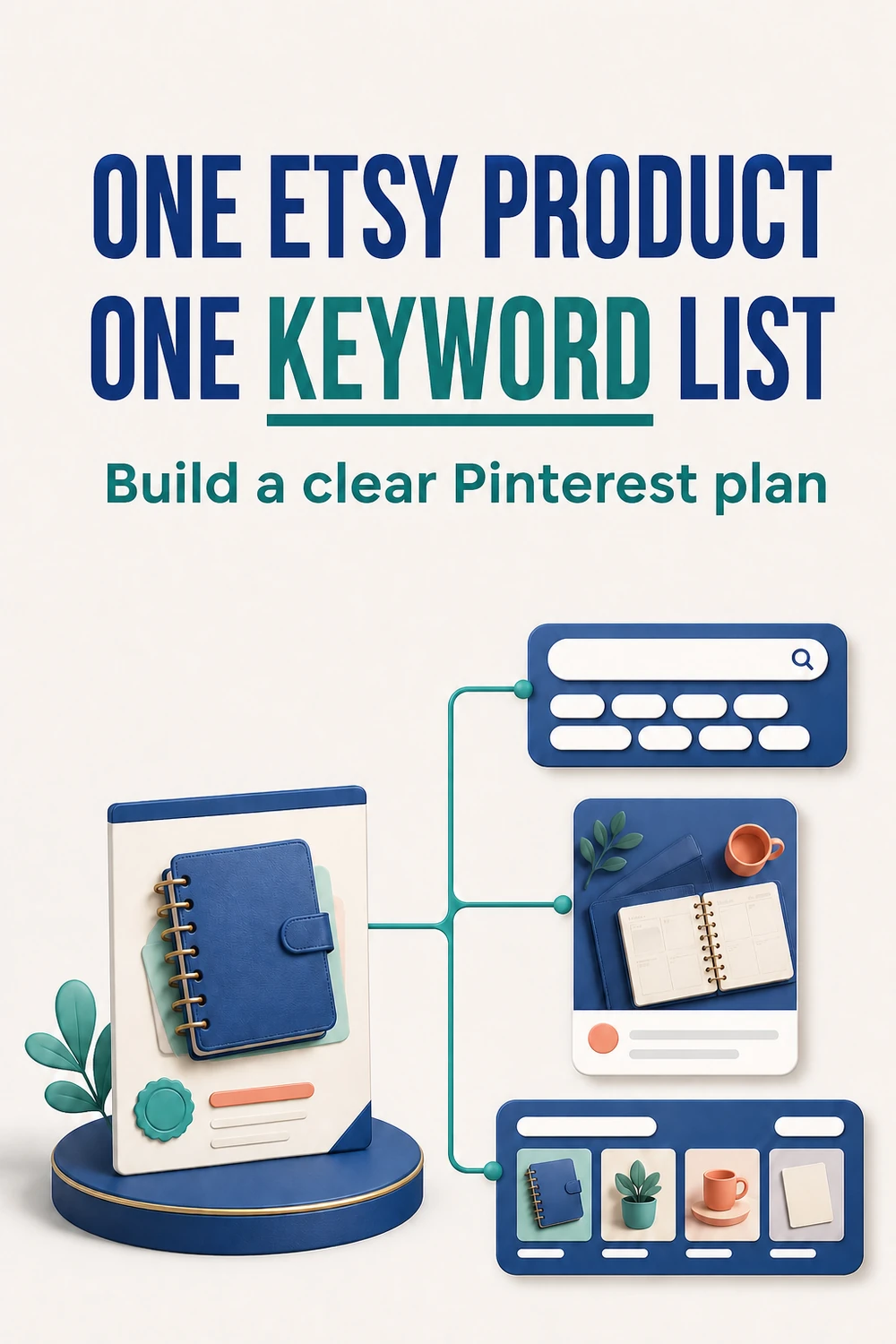
Create four columns:
- Product phrase: the exact item or file type.
- Buyer problem or use: the task, room, event or result it supports.
- Pin angle: product preview, checklist, comparison, mistake, process or example.
- Destination: the exact Etsy listing or article section that completes the promise.
Example: “Etsy expense tracker spreadsheet” can support a product-preview Pin linking to the exact listing, while “how to track Etsy expenses” can support an educational Pin linking to a useful guide. The same product can appear in both paths, but the search intent and destination should stay honest.
Match Pinterest keywords to the right board
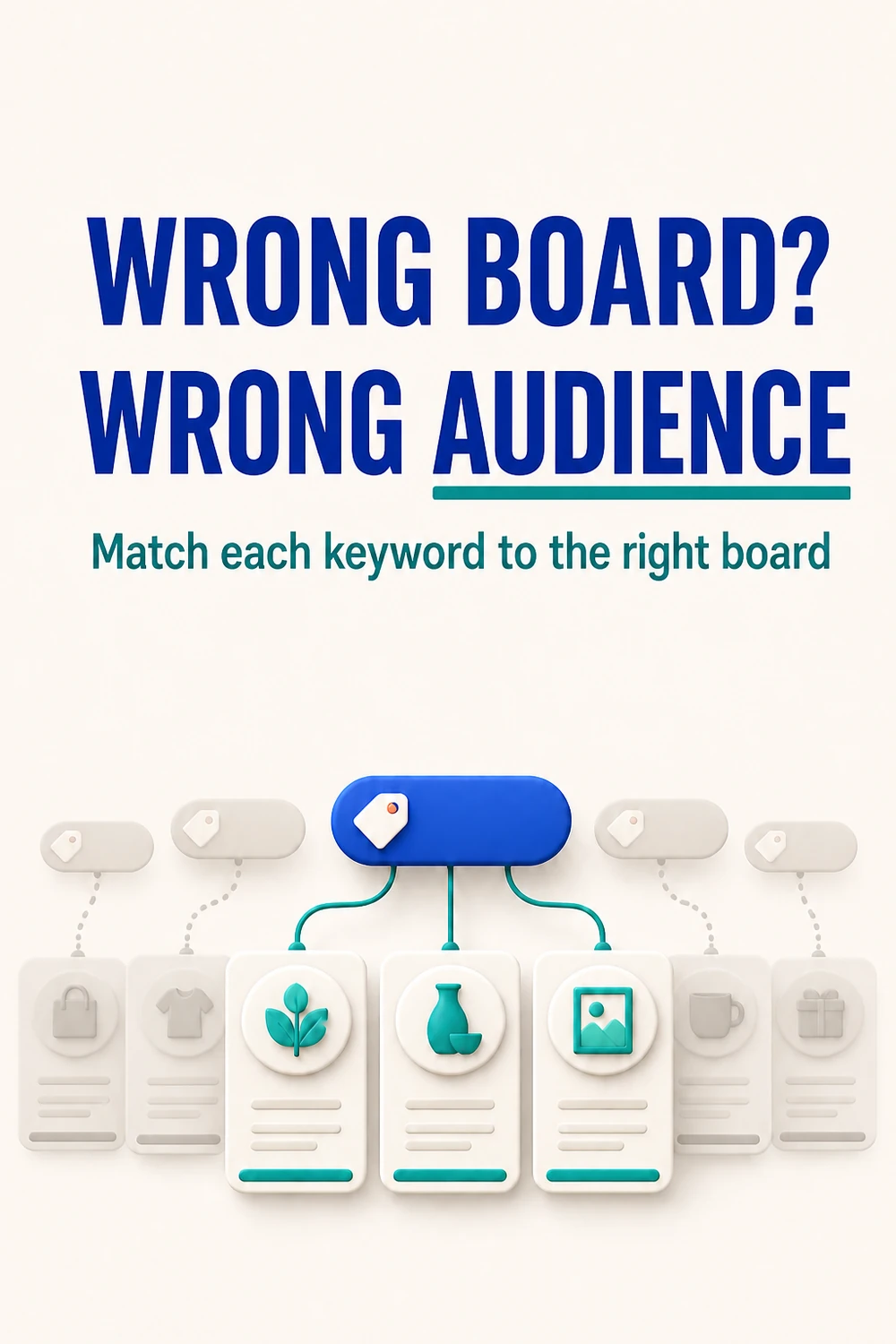
- Use a board whose name describes the same category or buyer problem.
- Do not save one Pin to several unrelated boards just to increase volume.
- Keep board descriptions plain and specific enough to support the board topic.
- Create a new board only when you have a durable topic and enough genuinely relevant content.
- When a phrase fits two boards, choose the board that best matches the Pin's visible promise.
For example, “Etsy expense tracker spreadsheet” belongs on a board for Etsy business tools or seller bookkeeping, not a broad home-office inspiration board. The board match should be understandable without seeing the rest of the account.
Test Pinterest keywords without guessing
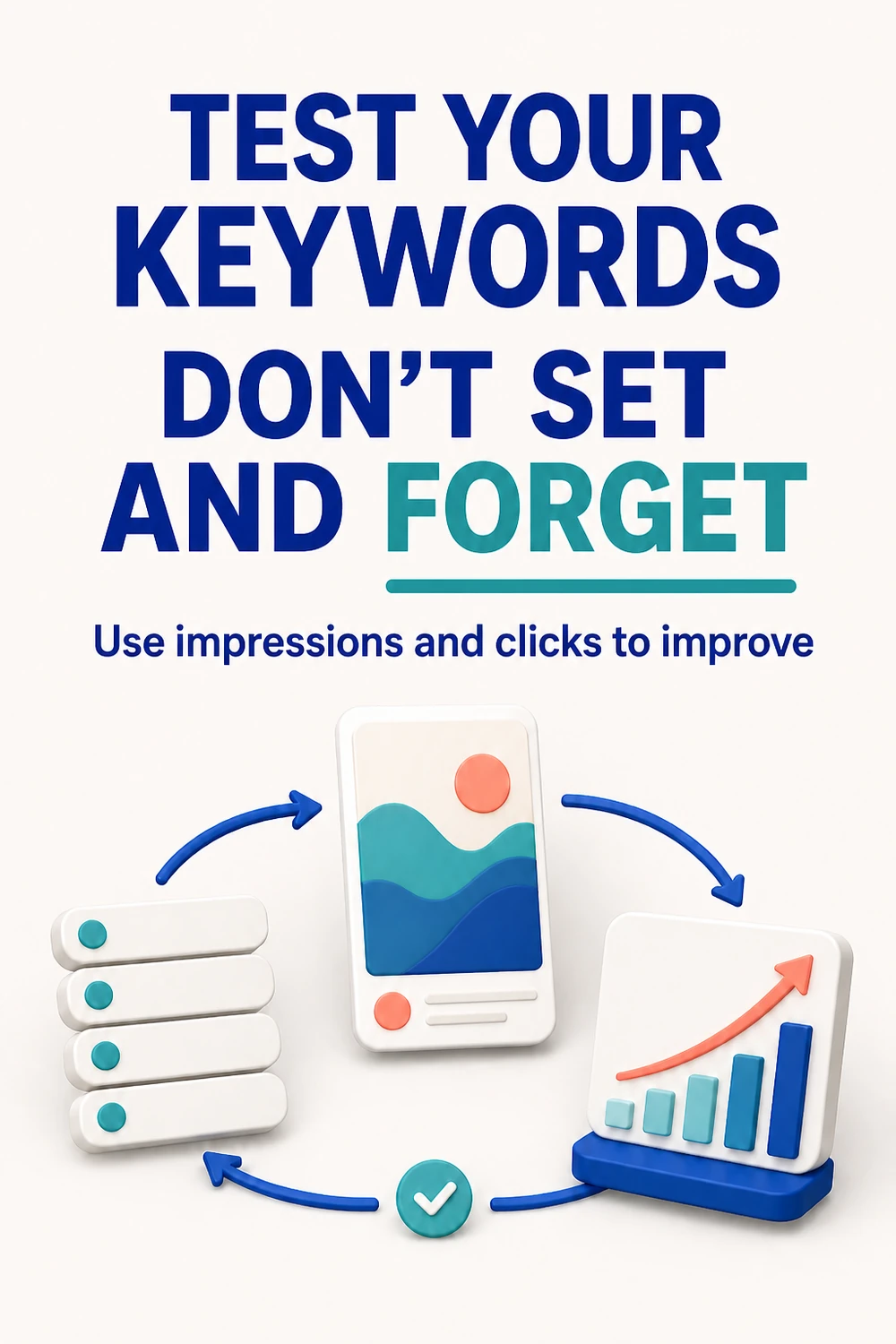
- Record the baseline. Note the Pin title, board, destination, date and early metrics.
- Wait for usable data. Do not rewrite a new Pin simply because the first few hours are quiet.
- Diagnose the stage. Low impressions can point to discovery or account-size limits; impressions without outbound clicks point to the creative, promise or destination path.
- Change one variable. Test a clearer headline, stronger product preview or more specific phrase without changing everything at once.
- Compare like with like. Judge Pins serving the same search intent and similar destination, not unrelated product categories.
DEEMWELL's current 30-day analytics show 156 impressions, 43 total audience and no engagements or outbound clicks. The immediate improvement is therefore clearer problem-to-outcome messaging and a stronger match between the search phrase, Pin and page. More keywords alone would not solve that click gap.
Frequently asked questions
Are Etsy keywords and Pinterest keywords the same?
They can overlap, but the platforms serve different contexts. Start with the product language buyers use, then check how Pinterest search phrases and results describe the same problem, style or use case.
How many Pinterest keywords should one Etsy product use?
Use a small, focused set that accurately describes one product, buyer problem and use case. A short relevant list is more useful than a long list of loosely related words.
How do you know whether a Pinterest keyword is working?
Track whether Pins using the phrase earn impressions, saves, Pin clicks and outbound clicks. Compare one change at a time and keep the Pin, board and destination aligned before judging the keyword.
Your next step
Choose one Etsy product. Write its plain product name, collect relevant Pinterest search wording and build a four-column keyword map before designing the next Pin.